
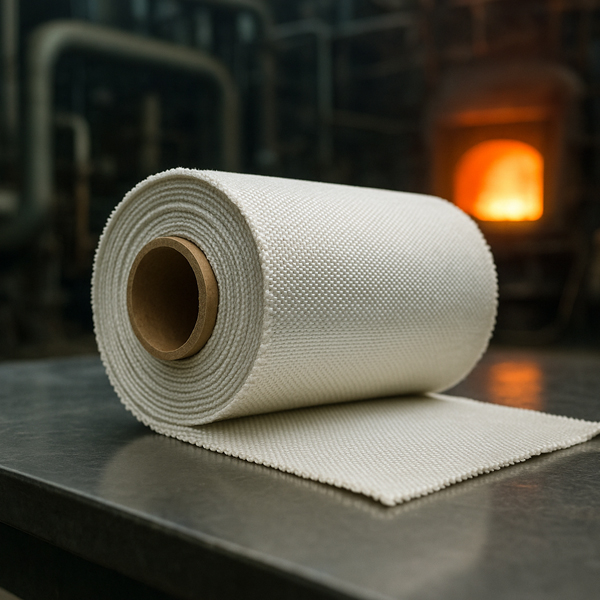
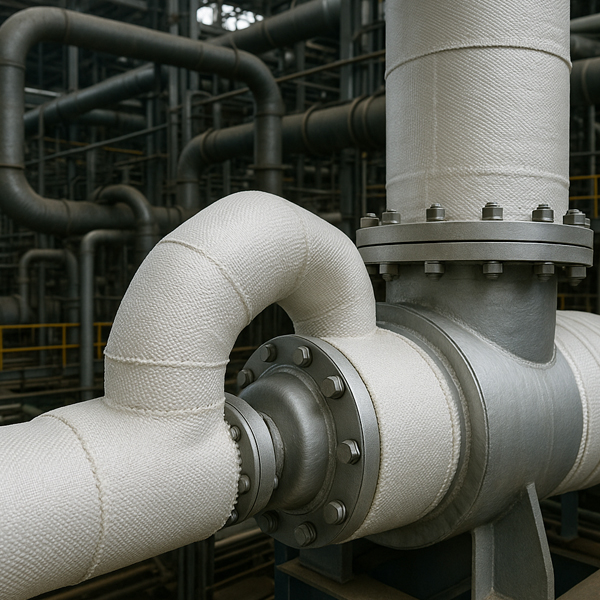
High Silica Fabrics is a kind of heat-resistant,insulating and soft special fiberglass fabric with easy processing ,versatility, heat resistance, insulation, softness and can be used as high temperature resistant, ablation resistant, heat insulation and heat preservation material. Additionally,it could withstand temperatures exceeding 1000° C (1832° F) without significant degradation and the instantaneous heat resistance temperature can reach 1450° C. Our High Silica Fabrics is widely for heat preservation and protection, sealing, fireproof materials, such as welding curtains, fire shutters, fire blankets, fireproof clothing, heat insulation curtains, steam pipeline heat insulation, metallurgical casting insulation protection, kiln and high temperature industrial furnace protective cover, wire and cable fire insulation, etc.
High silica glass fiber has outstanding thermal resistance. It can withstand extremely high temperatures, often exceeding 1000°C (1832°F) without significant degradation. This makes it ideal for applications where exposure to high heat is common, such as in fire protection, insulation, and aerospace industries.
This property of ablation resistance arises from its high silica content, typically exceeding 96%. This robust resistance to heat erosion makes it an ideal choice for applications where exposure to intense heat or flames is prevalent. Industries such as aerospace, automotive, construction, and manufacturing utilize high silica glass fiber in environments where thermal erosion is a concern, ensuring longevity and safety in various operational conditions.
The structure of High Silica Glass Fiber enables it to have a high dielectric strength, which is the maximum electric field that a material can withstand without experiencing electrical breakdown. This property allows it to effectively resist the flow of electrical current, making it suitable for use in high voltage applications.
High silica glass fiber demonstrates exceptional resistance to acidic environments due to high silica content, which shields the fiber from the corrosive effects of most acids. It finds extensive use in chemical processing plants, laboratories, and industrial manufacturing facilities where acids are prevalent either as part of processes or within the environment.
| Area Weight (g/m2) | Density(ends/25mm) Warp Weft |
Thickness (mm) | Tensile Strength(N/25mm) Warp Weft |
SiO2 (%) | LOI (%) | ||
| 300±30 | 37±3 | 30±3 | 0.32±0.03 | ≥1000 | ≥800 | ≥96 | Ç10 |
| 420±50 | 32±3 | 28±3 | 0.40±0.04 | ≥1200 | ≥1000 | ≥96 | Ç10 |
| 600±50 | 50±3 | 35±3 | 0.58±0.06 | ≥1700 | ≥1200 | ≥96 | Ç10 |
| 900±100 | 37±3 | 30±3 | 0.82±0.08 | ≥2400 | ≥2000 | ≥96 | Ç10 |
| 1000±100 | 40±3 | 33±3 | 0.95±0.10 | ≥2700 | ≥2000 | ≥96 | Ç10 |
| 1100±100 | 48±3 | 32±3 | 1.00±0.10 | ≥3000 | ≥2400 | ≥96 | Ç10 |
| 1350±100 | 40±3 | 33±3 | 1.20±0.12 | ≥3200 | ≥2500 | ≥96 | Ç10 |
| 240±20 | 35±2.5 | 35±2.5 | 0.26±0.026 | ≥260 | ≥190 | ≥96 | Ç2 |
| 420±50 | 33±3 | 29±3 | 0.45±0.05 | ≥350 | ≥300 | ≥96 | Ç2 |
| 600±50 | 52±3 | 36±3 | 0.65±0.10 | ≥400 | ≥300 | ≥96 | Ç2 |
| 1100±100 | 50±3 | 32±3 | 1.05±0.10 | ≥700 | ≥400 | ≥96 | Ç2 |
| 1350±100 | 52±3 | 28±3 | 1.20±0.12 | ≥750 | ≥400 | ≥96 | Ç2 |
| 600±50 | 52±3 | 36±3 | 0.65±0.10 | ≥800 | ≥600 | ≥96 | Ç5 |
| 1100±100 | 50±3 | 32±3 | 1.05±0.10 | ≥900 | ≥700 | ≥96 | Ç5 |