
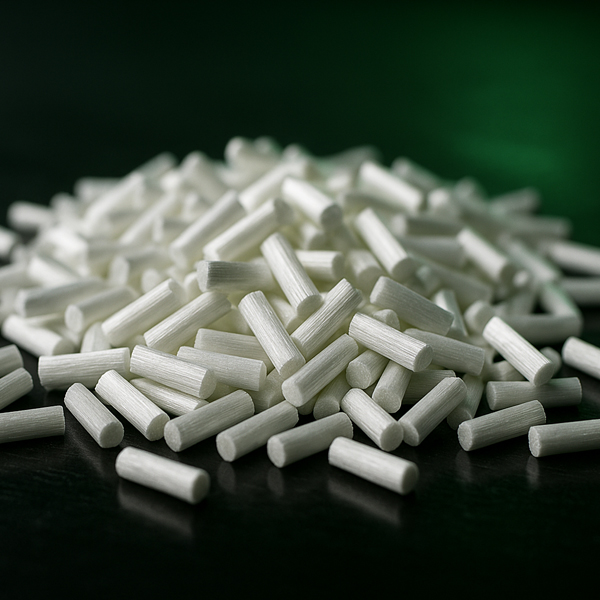
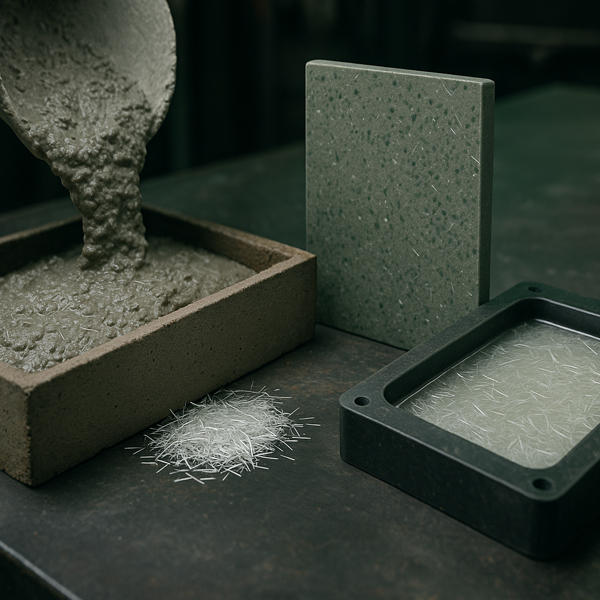
High silica chopped strands is cut and processed by high-silicon glass fiber yarn, known for its high temperature resistance, ablation resistance and corrosion resistance. It has gradually substitute for asbestos and ceramic fibers and becomes the main thermal insulation material. These chopped strands are composed primarily of silica and offer remarkable resistance to extreme temperatures, making them invaluable across various industries. High silica chopped strand can be directly used as insulation filling material, to produce high- silica needled felt and high-silica wet-laid felt and as a reinforcing material mixed with organic resin to make ablation resistant bodies, such as missile heat insulation cover etc.
High silica glass fiber has outstanding thermal resistance. It can withstand extremely high temperatures, often exceeding 1000°C (1832°F) without significant degradation. This makes it ideal for applications where exposure to high heat is common, such as in fire protection, insulation, and aerospace industries.
This property of ablation resistance arises from its high silica content, typically exceeding 96%. This robust resistance to heat erosion makes it an ideal choice for applications where exposure to intense heat or flames is prevalent. Industries such as aerospace, automotive, construction, and manufacturing utilize high silica glass fiber in environments where thermal erosion is a concern, ensuring longevity and safety in various operational conditions.
The structure of High Silica Glass Fiber enables it to have a high dielectric strength, which is the maximum electric field that a material can withstand without experiencing electrical breakdown. This property allows it to effectively resist the flow of electrical current, making it suitable for use in high voltage applications.
High silica glass fiber demonstrates exceptional resistance to acidic environments due to high silica content, which shields the fiber from the corrosive effects of most acids. It finds extensive use in chemical processing plants, laboratories, and industrial manufacturing facilities where acids are prevalent either as part of processes or within the environment.
| Filament Diameter (µm) | Length(mm) | Moisture Content (%) | LOI (%) | SiO2 (%) | Working Temperture (oC) |
|---|---|---|---|---|---|
| 7.0±1.1 | 3-9 | ≤1 | ≤3 | ≥96 | 1000 |
| 9.0±2.0 | 3-9 | ≤1 | ≤3 | ||
| 9.0±3.0 | 50-100 | ≤7 | ≤10 |